



If you think of a traditional course, you might have the following image in mind: a lecturer stands behind the lectern, first explains scientific theories in a monologue and then puts an open-ended question to the audience. After a long pause, some students start leafing through their papers while others avoid eye contact. Finally, someone mumbles a tentative answer. The lecturer kindly corrects what they have said and continues to explain further, and the group breathes a sigh of relief. What this dynamic is hiding is a phenomenon that research describes as a lack of psychological safety. Without this safety, learning success has been proven to decline.
The most effective lever for changing precisely this is the manner of the moderation, i.e. how the seminar leader supervises teaching-learning processes and guides them methodically and structurally.
Enabling knowledge acquisition: Facilitation as a teaching practice
In his meta-analyses, John Hattie, one of the best-known educational researchers today, showed that the lecturer still plays a key role in the learning process – although not merely as a provider of information, as described in the example above (Hattie, 2008). Rather, the aim is to make the students’ learning visible so that it can be fostered in the next step in a targeted manner. Instead of being the protagonist, the lecturer takes on the role of the enabler.
This is precisely where facilitation comes in: in higher education, the term is often used synonymously with “relaxed, passive moderation”. This assumption is misleading, however, as lecturers do not withdraw from the process and the group is not left to its own devices either. Facilitation, according to Carl Rogers’ (1969) original concept and its further development since then, is a complex, active teaching practice. It aims to activate group knowledge and make it usable. The participants learn about other positions through a change in perspective, experience productive cooperation and are motivated to get involved in implementing measures. This approach requires attentiveness, empathy and strategic thinking on the part of the leader.
For lecturers at universities, what this means specifically is providing students with space while giving them structure at the same time, focusing less on themselves and more on the participants, giving constructive feedback instead of evaluating, directing attention and thus making learning processes visible. This balance is the tool to use to create psychological safety and thus ensure sustainable learning.

Psychological safety is not synonymous with harmony
The role of the facilitator describes what lecturers can do. Psychological safety, on the other hand, defines the conditionsunder which those techniques can even be useful. The term dates back to Harvard professor Amy Edmondson and her research findings on work groups in hospital teams at the end of the 1990s. Edmondson (1999) defined psychological safety as a group’s shared conviction that there will be no negative consequences if errors are made. In a (seminar) room that is psychologically safe, students can express their own ideas, ask questions, point out errors and express controversial opinions – without fear of exposure. Psychological safety should not be understood as a synonym for consensus and freedom from conflict; it is rather what makes productive conflict possible in the first place, as people have the courage to be honest (Edmondson, 2018).
Psychological safety is not an attribute of individual students, therefore. It develops on a group level and is significantly influenced by how the lecturer behaves as a moderator. In a study in a university context, Soares and Lopes (2020) showed that when lecturers behave authentically as a leader it can create a safe learning environment and subsequently have a positive impact on academic performance. How seminar leaders moderate, how they respond to contributions and what interventions they make therefore shapes the atmosphere of the group and has an impact on sustainable learning gains.
Practical facilitation techniques for your course
Timothy R. Clark (2020) developed the concept of psychological safety further and defined four stages as a framework for reflection:
- Inclusion safety: People feel welcome as part of the group,
- Learner safety: Errors are seen as learning opportunities,
- Contributor safety: People’s own ideas are taken seriously, and
- Challenger safety: People are allowed to question things.
These four levels can be translated directly into concrete moderation actions that you can try out in your next course:
Don’t judge students’ contributions – take them on board with appreciation: If students have the feeling that their ideas are being ignored, they will stop contributing in the long term. Comments like “Exactly, wonderful!” or “That’s not quite right” emphasise the lecturer’s monopoly on knowledge. Instead, shift the authoritarian focus back to the collective and create contributor safety that way: “That’s an exciting approach – what would that look like in connection with X?” or “How do you see it? Are there any other perspectives regarding this?” Even if the answer is incorrect or incomplete, you do not have to intervene immediately to correct it. The follow-up question “Based on what you said, how could we think further?” provides a productive (learning) space for the error without setting it aside.
Use wait time as a conscious tool: Research on wait time (Häusler et al., 2025) suggests that even a pause of around five seconds after a question is asked leads to better-quality answers. Apply the moderation technique consciously to enable cognitive processing and give your students the space they need.
Establish a positive error culture: Although this is often demanded, it is rarely implemented. Address errors proactively and normalise them. Mention this explicitly with the following statement, for example: “In our seminar, wrong answers are not only allowed, they’re often an interesting starting point for new ideas”. Transparency creates acceptance and, as time goes on, learner safety.
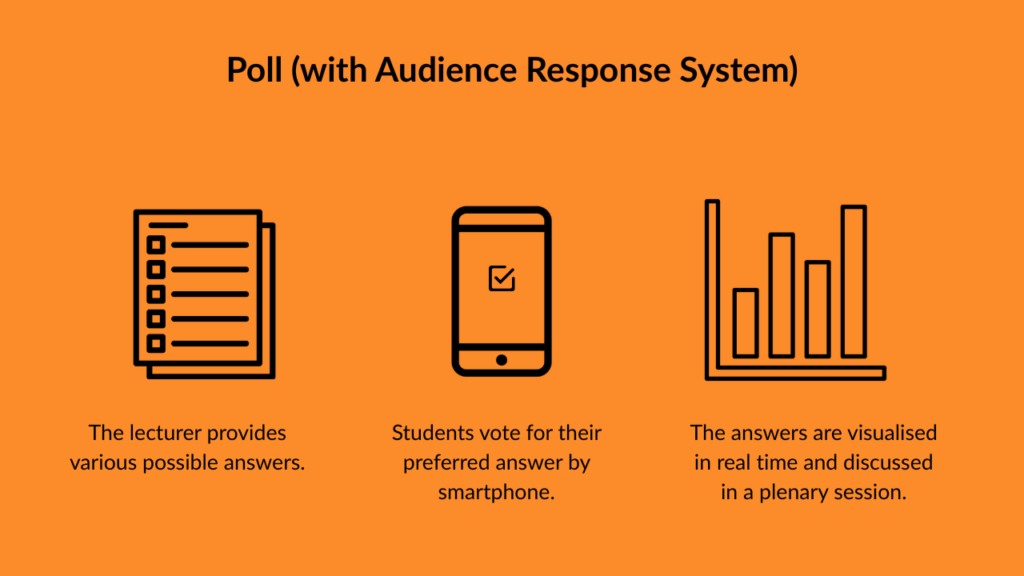
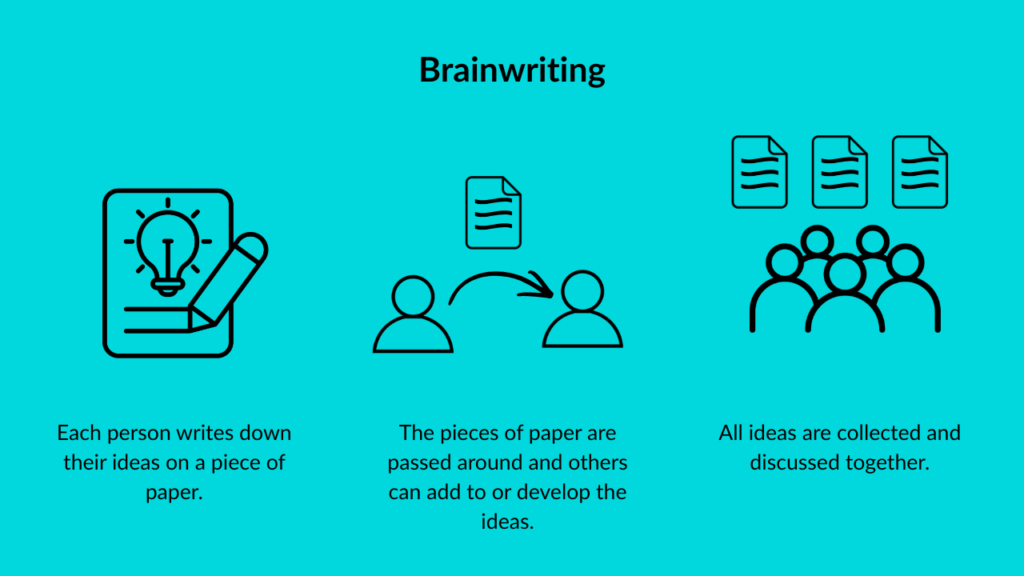
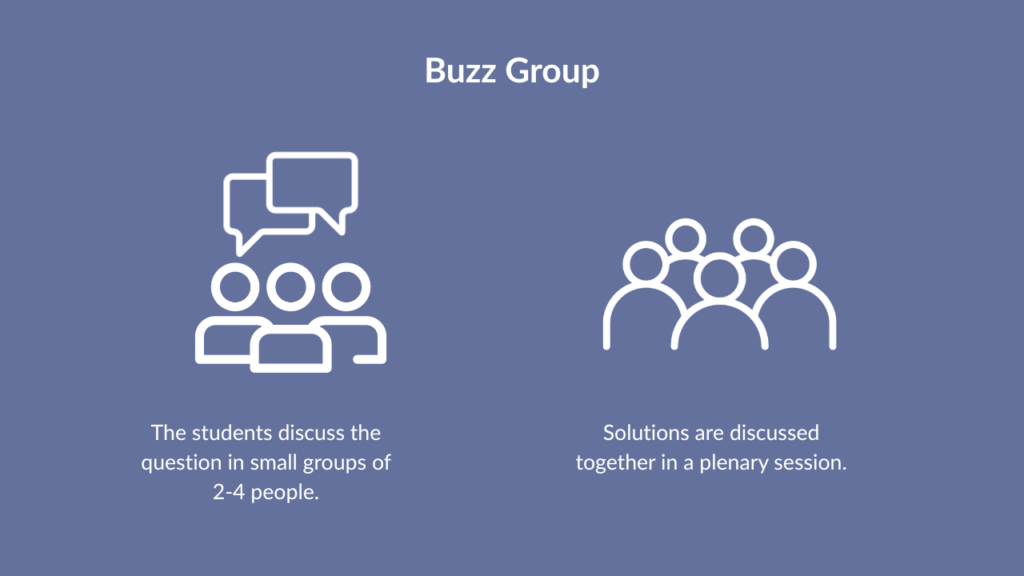
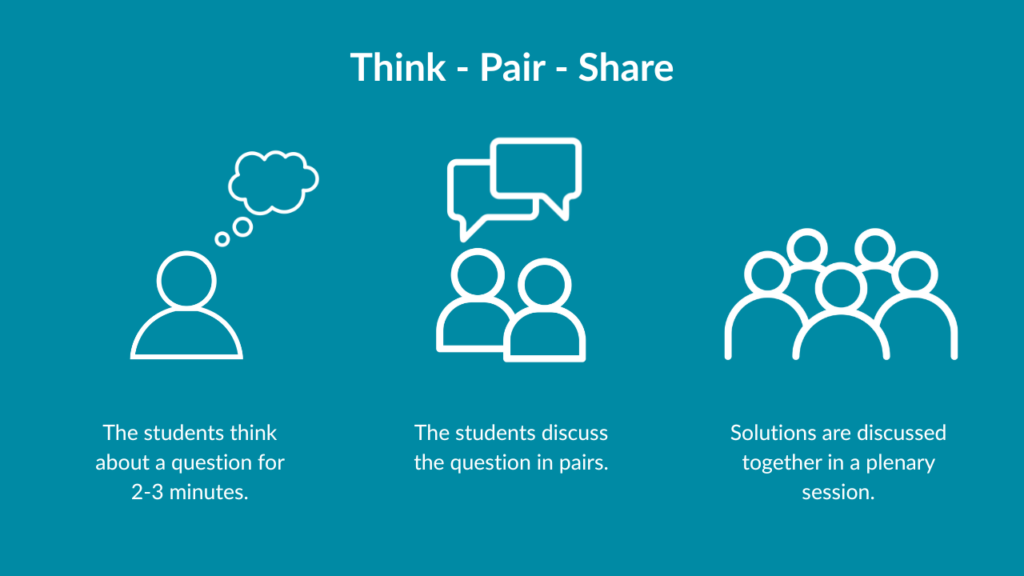
Choose small, low-risk participation formats: To minimise the fear of exposure, you can use social forms that create structure, such as polls, buzz groups, brainwriting or the think-pair-share concept (see Figure 1). The latter builds a bridge, especially for quieter students. Those who participate in a low-threshold way also speak in the group later on. You are also welcome to involve your students in how the moderation is designed: “How would you like to get your feedback – openly in front of the group or in private?”

Alexandra Franke-Nanic
Alexandra Franke-Nanic works at the Centre for Language and Communication at the University of Regensburg and is responsible for the Speech Communication and Rhetoric Master’s programme. She specialises in the fields of mediation, coaching and team dynamics. She is also interested in the design of innovative digital learning environments.