





How can good teaching be achieved in medicine – between the day-to-day at the clinic, research and the challenges of the future? In this 12th podcast episode, Birgit Hawelka talks to Professor Dr. Martina Müller-Schilling. The conversation is about innovative teaching concepts like the A-STAR training ward at University Hospital Regensburg, interprofessional learning and topics of the future in medical degree programmes. We also discuss why good teaching is always about teamwork – and how students not only acquire theoretical knowledge but are also specifically prepared for their future careers.
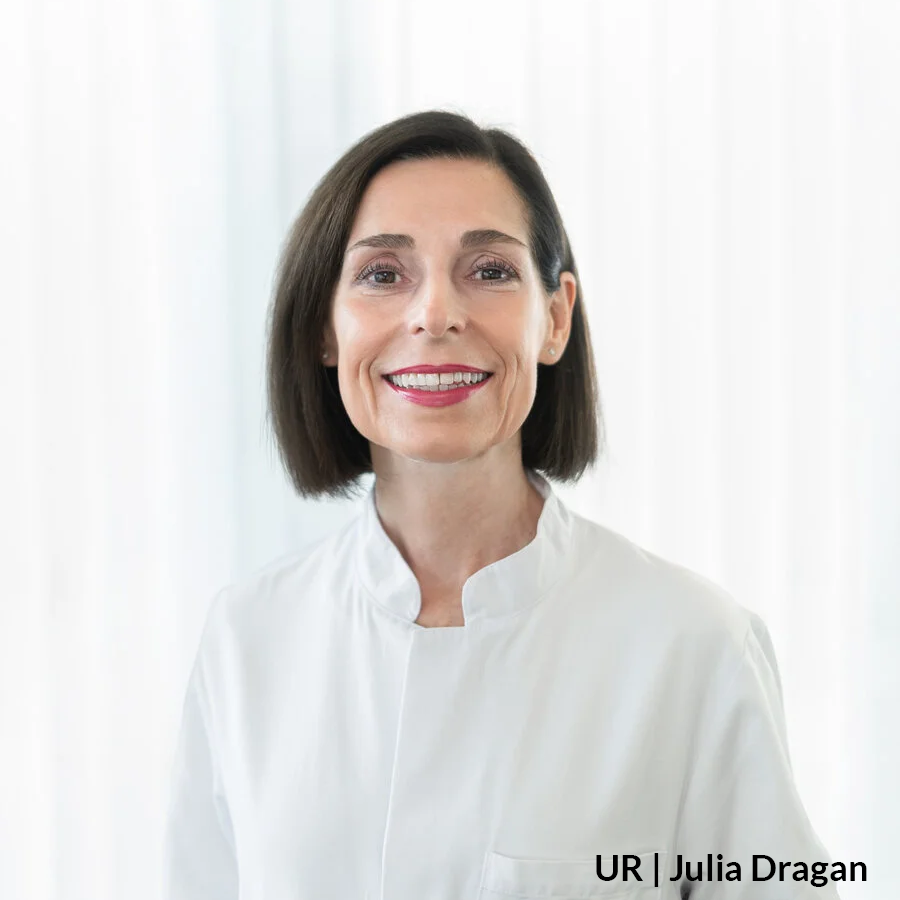
Prof.in Dr. med. Dr. h. c. Martina Müller-Schilling is Director of the Clinic and Polyclinic for Internal Medicine I at University Hospital Regensburg and holds the Chair of Internal Medicine I at the University of Regensburg. The UNICUM Foundation named her “Professor of the Year 2025” in the Medicine/Natural Sciences category for her outstanding commitment to teaching.
Professor of the Year | UNICUM Foundation
The UNICUM Foundation awards the title of Professor of the Year to university lecturers who go the extra mile to support students in preparing for their careers. In addition to the quality of teaching, the focus is also on added commitment: the close interweaving of studies and practice, cooperation with external partners, career formats and the targeted fostering of skills relevant to the profession.
The award winners are selected by an independent jury based on public nominations and in-depth research. In 2025, there were approximately 5,000 proposals submitted for around 600 professors.
Time stamps
| 02:28 | What is a mark of good teaching for you? |
| 05:12 | What are the ideas behind the A-Star project at University Hospital Regensburg? |
| 09:02 | How can students apply for A-Star? |
| 10:30 | Do they have the A-Star concept at other clinics too? |
| 12:30 | How are patient cases selected with A-Star? |
| 14:10 | How do you incorporate topics of the future into the curriculum, like prevention, nutrition and mental health? |
| 17:50 | How can the mental health of (aspiring) doctors be supported? |
| 22:28 | What is your vision of a medical degree programme for the future where interdisciplinarity and topics of the future as well as the resilience of individual students are integrated better? |
References
Duijvestein, M., Sidhu, R., Hann, A., van Hooft, J. E., & Müller-Schilling, M. (2023). Task force greener gastroenterology: Towards eco-friendly practices in healthcare. United European Gastroenterology Journal, 11(4), 394–395. https://doi.org/10.1002/ueg2.12391
Duijvestein, M., Sidhu, R., Zimmermann, K., Carrington, E. V., Hann, A., Sousa, P., Touw, H. R. W., van Hooft, J. E., & Müller, M. (2024). The United European Gastroenterology green paper—Climate change and gastroenterology. United European Gastroenterology Journal, 12(9), 1292–1305. https://doi.org/10.1002/ueg2.12698
Schlosser-Hupf, S., Aichner, E., Meier, M., Albaladejo-Fuertes, S., Mahnke, A., Ruttmann, K., Rusch, S., Michels, B., Mehrl, A., Kunst, C., Schmid, S., & Müller, M. (2024). Cost-effectiveness in an interprofessional training ward within a university department for internal medicine: A monocentric open-label controlled study of the A-STAR Regensburg. Frontiers in Public Health, 12, 1340953. https://doi.org/10.3389/fpubh.2024.1340953
Schlosser-Hupf, S., Staudacher, J., Wagner, V., Unger, M., Sousa, P., Donning, I. M., Müller-Schilling, M., Heinrich, H., & GENIUS Study Group (National Societies Forum, National Societies Committee, Young Talent Group & Friends, Education Committee). (2025). Harmonising gastroenterology training: An analysis of gastroenterology training curricula of the United European Gastroenterology member societies. United European Gastroenterology Journal. Advance online publication. https://doi.org/10.1002/ueg2.70127
Schlosser-Hupf, S., Aichner, E., Meier, M., Albaladejo-Fuertes, S., Ruttmann, K., Rusch, S., Michels, B., Mehrl, A., Kunst, C., Schmid, S., & Müller, M. (2024). Evaluating the impact of interprofessional training wards on patient satisfaction and clinical outcomes: A mixed-methods analysis. Frontiers in Medicine, 11, 1320027. https://doi.org/10.3389/fmed.2024.1320027
Zimmermann, K., Rodríguez-Lago, I., Sidhu, R., Heinrich, H., Sousa, P., Dieninyte, E., Duijvestein, M., Hann, A., Gemilyan, M., Knüttel, H., Nowak, A., Montalto, P., Shiha, M. G., Krčálová, P., Vanek, P., Skuja, V., Duricek, M., Manza, F., Ong, J., … Müller, M. (2025). Promoting well-being among gastroenterologists: A call for systemic action. United European Gastroenterology Journal. Advance online publication. https://doi.org/10.1002/ueg2.70149
Suggestion for citation of this blog post
Hawelka, B. (2026, January 15). Ward rounds, responsibility and vision: Professor Dr. Martina Müller-Schilling talks about sustainable teaching in medicine. Lehrblick – ZHW Uni Regensburg. https://doi.org/10.5283/ZHW.20260115.EN

Birgit Hawelka
Dr. Birgit Hawelka is a research associate at the center for University and Academic Teaching at the University of Regensburg. Her research and teaching focuses on the topics of teaching quality and evaluation. She is also curious about all developments and findings in the field of university teaching.